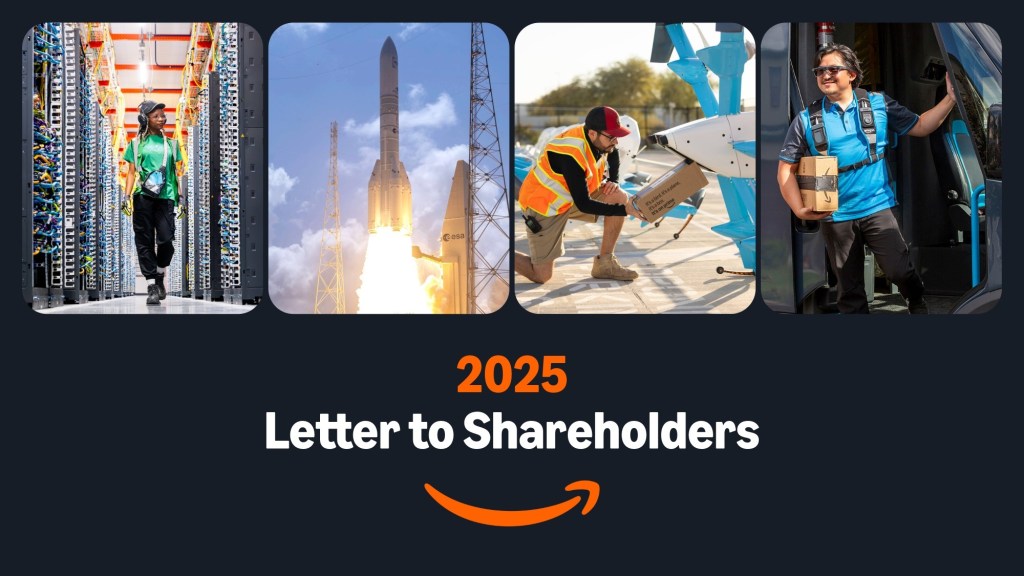
Andy Jassy’s April 2026 shareholder letter revealed Amazon’s operational buildout: over 1 million robots across fulfillment centers, $4 billion committed to rural delivery, 85+ Same Day Fulfillment Centers delivering 500 million units, Prime Air drones serving 30 million customers by year-end, 241 satellites launched for Amazon Leo.
The Modular Boundaryless Model
Boundaryless organizations take three forms: barrier-free (permeable internal boundaries), modular (outsourcing noncore activities), and virtual (partnerships among independent entities). Amazon’s fulfillment strategy deploys modular design at unprecedented scale.
Traditional modular organizations outsource specific functions. Amazon inverts this: multiple specialized internal modules, each optimized for different delivery speeds and geographies, operate semi-independently while maintaining seamless coordination.
The modules: traditional fulfillment centers (1-2 day delivery), Same Day Fulfillment Centers carrying top 90,000 SKUs, micro-fulfillment centers for 20-minute delivery (360+ in India), Prime Air drone hubs (sub-30-minute delivery), and Amazon Leo satellite network for rural connectivity.
Each addresses a specific customer need with distinct infrastructure and performance metrics. Together they create delivery optionality single-structure networks can’t match.
Boundaries Extending Outward
Jassy’s letter hints at evolution: “Wherever we can leverage our scale and real-time feedback loop from so many robots in our fulfillment network to build robotics solutions for other industrial and consumer customers, we’ll explore doing so.”
This represents external boundary permeability. Amazon’s 1 million robots generate operational data at scale. Learnings from coordinating autonomous systems across hundreds of facilities create expertise extending beyond fulfillment.
Selling robotics solutions would transform Amazon’s modular structure from purely internal to hybrid internal-external. Amazon becomes both operator and vendor of fulfillment technology.
The Leo satellite constellation demonstrates similar logic—built for Amazon’s needs, capable of serving external customers. Infrastructure designed for internal use that scales to external markets, mirroring how AWS emerged from Amazon’s internal infrastructure and became standalone business.
Strategic Implications
The $4 billion rural commitment, 85+ SSDs, 360+ micro-fulfillment centers, Prime Air scaling, and Leo constellation represent organizational structure as strategic weapon. Jassy frames these as “squiggly lines” rather than straight paths. Modular boundaryless design embraces organizational complexity to unlock strategic optionality. The structure itself becomes competitive advantage.
Sources & Notes
This analysis applies boundaryless organizational design concepts to Amazon’s fulfillment infrastructure detailed in CEO Andy Jassy’s 2025 Letter to Shareholders.
All interpretations and strategic conclusions represent independent analysis.
 Kyrus' Fulfillment Files
Leave a comment