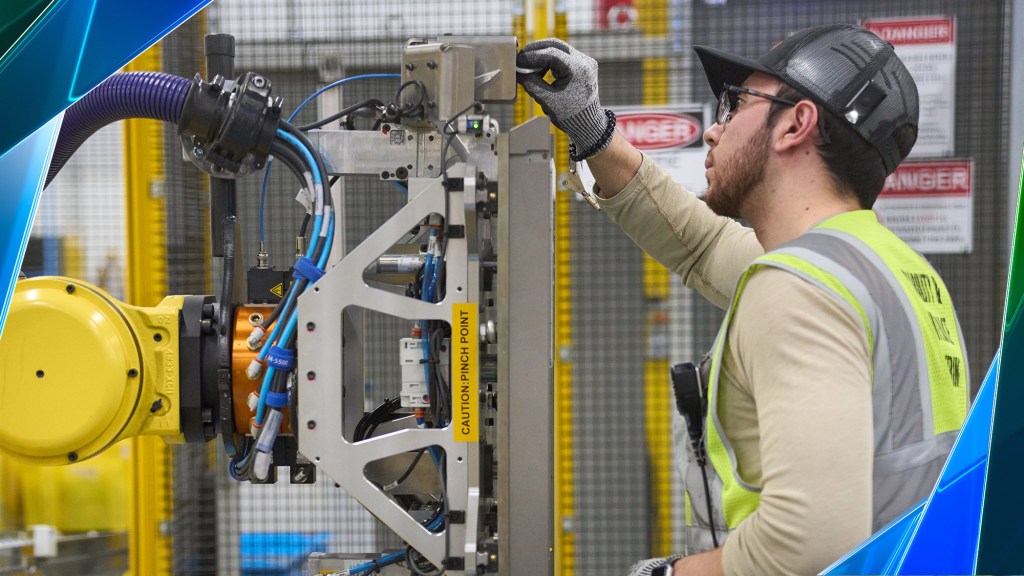
Amazon’s competitive advantage is often discussed in terms of warehouses, robotics, and cloud infrastructure. Tangible assets are important, but they tell only part of the story. To understand Amazon’s sustained strategic position, it is essential to look at its intellectual assets; the knowledge, capabilities, and organizational structures that allow it to put technology and physical resources to strategic use. These intangible strengths amplify the value of Amazon’s tangible investments and make the firm’s advantage more durable.
Intellectual assets are increasingly critical in competitive strategy because they govern how effectively a firm uses its tangible resources. Amazon’s recent moves; especially around automation, artificial intelligence (AI), and organizational redesign—highlight how intellectual assets act as multipliers for operational capability and future growth.
Human Capital and Organizational Capability
One of Amazon’s most valuable intellectual assets is its internal human capital: the engineers, operations experts, and cross-functional teams that continually refine complex systems. Amazon’s organizational structure blends hierarchical oversight with autonomous project teams, allowing small teams to drive innovation while aligning with broader corporate goals. This structure supports rapid experimentation and knowledge transfer across units, minimizing barriers to scaling successful practices.
Unlike firms that focus solely on hardware or software investments, Amazon embeds its human capital into ongoing improvement cycles. Workers and leaders are expected to contribute to process refinement, not just task execution. This creates a learning organization, one that improves not just because it has resources, but because it knows how to apply and adapt them over time.
Data, Algorithms, and Structural Knowledge
Intellectual assets also include data and the systems that interpret it. Amazon’s vast customer, inventory, and logistics data streams are not just stored; they are actively integrated into decision-making processes across the company. Sophisticated algorithms optimize pricing, routing, inventory placement, and demand forecasting—actions that tangible assets alone cannot accomplish.
This integration of data into operational routines means that Amazon’s fulfillment network becomes smarter with scale. Instead of treating data as a by-product, Amazon turns it into structural knowledge: a repository of patterns and insights that improve efficiency and responsiveness. Competitors can buy robotics or AI tools, but without a deep, integrated knowledge base and the capability to act on it, those tools deliver limited benefit.
Investments in AI and Long-Term Structural Advantage
Recent strategic commitments underscore how Amazon is betting on intellectual assets to extend its advantage. The company announced plans for massive capital expenditures, reportedly as high as $200 billion focused largely on AI and cloud infrastructure. These investments, aimed at in-house data centers, specialized chips, and AI model development, reinforce organizational knowledge as a strategic asset.
By building AI capabilities internally, Amazon moves beyond purchasing third-party solutions. Proprietary models and infrastructure become part of the firm’s differentiated capabilities—asset combinations that are difficult for competitors to replicate meaningfully. These intellectual assets tie directly to how the firm analyzes demand, manages inventory, and automates fulfillment execution, reinforcing the notion that competitive advantage stems from capability systems, not isolated tools.
Social Capital and Collaborative Knowledge
Another dimension of intellectual assets is social capital; the networks, norms, and shared understandings that facilitate coordination and cooperation. Amazon’s engineering culture, leadership principles, and internal communication protocols foster a shared language for solving complex problems. Teams are structured to transfer insights efficiently across functions and geographies, reducing knowledge silos.
This social capital matters because knowledge that is locked in individuals or isolated teams does not generate competitive advantage at scale. Amazon’s ability to share, codify, and institutionalize insights across its global operations helps it operationalize innovation more consistently than competitors.
Intellectual Assets vs. Rigidities
It is important to note that intellectual assets can also become source of rigidity if not managed well. Over-specialization, entrenched practices, or excessive focus on internal tools can inhibit responsiveness to new strategic threats. Amazon’s ongoing restructuring of its AI teams and leadership to better align with competitive dynamics suggests it is actively managing this tension.
Strategic Implications
Amazon’s intellectual assets; human capital, structural knowledge, social capital, and proprietary AI capability; are central to the firm’s ability to sustain competitive advantage. These assets influence how Amazon uses its physical infrastructure, how it innovates at scale, and how it adapts to emerging competitive pressures. Tangible resources like warehouses and robotics matter only insofar as the company’s intellectual systems harness them effectively.
Recognizing and strengthening intellectual assets allows Amazon to respond proactively to competitive, technological, and regulatory change, positioning it to remain resilient in the face of disruption.
Sources & Notes
This analysis draws on publicly available information regarding Amazon’s organizational design, corporate investments, and technological strategy; especially as they relate to intellectual assets and capability systems. Sources include industry reporting from the Financial Times and business analysis on capital expenditure commitments, as well as research on organizational structure and strategic management principles.
Image source: AboutAmazon.com (Press / Media assets).
All interpretations and conclusions represent the author’s independent analysis.
 Kyrus' Fulfillment Files
Leave a comment